

A new and powerful tool
Boltz is well-established as a first-in-class provider for biomolecular structure and affinity prediction, with accuracy comparable to physics-based FEP while running over 1000x faster. In their newest release, Boltz announced BoltzProt-1, an improved protein design pipeline with protein-protein affinity predictions, and BoltzMol-1, their first generative pipeline for small molecule design across a diverse range of targets. These models unlock new capabilities in protein and small molecule hit discovery at scale, especially in conjunction with the new Boltz API, which has been designed to serve the whole Boltz family of models effectively, efficiently, and reliably. Now, a single API call can execute:
Protein structure and binding prediction
Small molecule design and ADME prediction
Peptide, antibody, nanobody, and protein design
Small molecule and protein library screening
We’ve made these tools even more accessible with Axon: API calls can be run with a simple prompt rather than code. Axon’s connective intelligence provides context, analysis, and coordination with upstream and downstream tools, integrating powerful Boltz API tools into broader AI-driven workflows that can significantly accelerate pre-clinical drug discovery. Below, we explore what is possible with the Boltz API through a design campaign on a modern and clinically-relevant oncogenic target.
Cracking an ‘undruggable’ target: TBXT
TBXT (also called Brachyury) is a T-box transcription factor whose aberrant reactivation, especially in the G177D variant, drives tumor cell proliferation in a rare and treatment-resistant bone cancer called chordoma. TBXT has been validated with gene knockout as an effective and highly specific target for chordoma, but has historically been considered ‘undruggable’ due to its lack of an enzymatic active site or other deep pockets. Recent work in structural biology has identified allosteric pockets that can potentially be exploited, and has discovered molecules with moderate affinity to TBXT. There is still much work to be done: TBXT is the target of a recent drug discovery challenge hosted by the Chordoma Foundation.
Structure prediction and validation in minutes
Knowing the 3D structure of a target protein is integral to rational drug design. Here, we started by identifying the structure of TBXT G177D with Boltz’s “structure and binding prediction” workflow, steering the prediction with the strongest, (albeit still moderately) binding compound (labeled Compound 10) found in a recent experimental campaign. We launched the workflow and associated prep work in Axon with the prompt below:
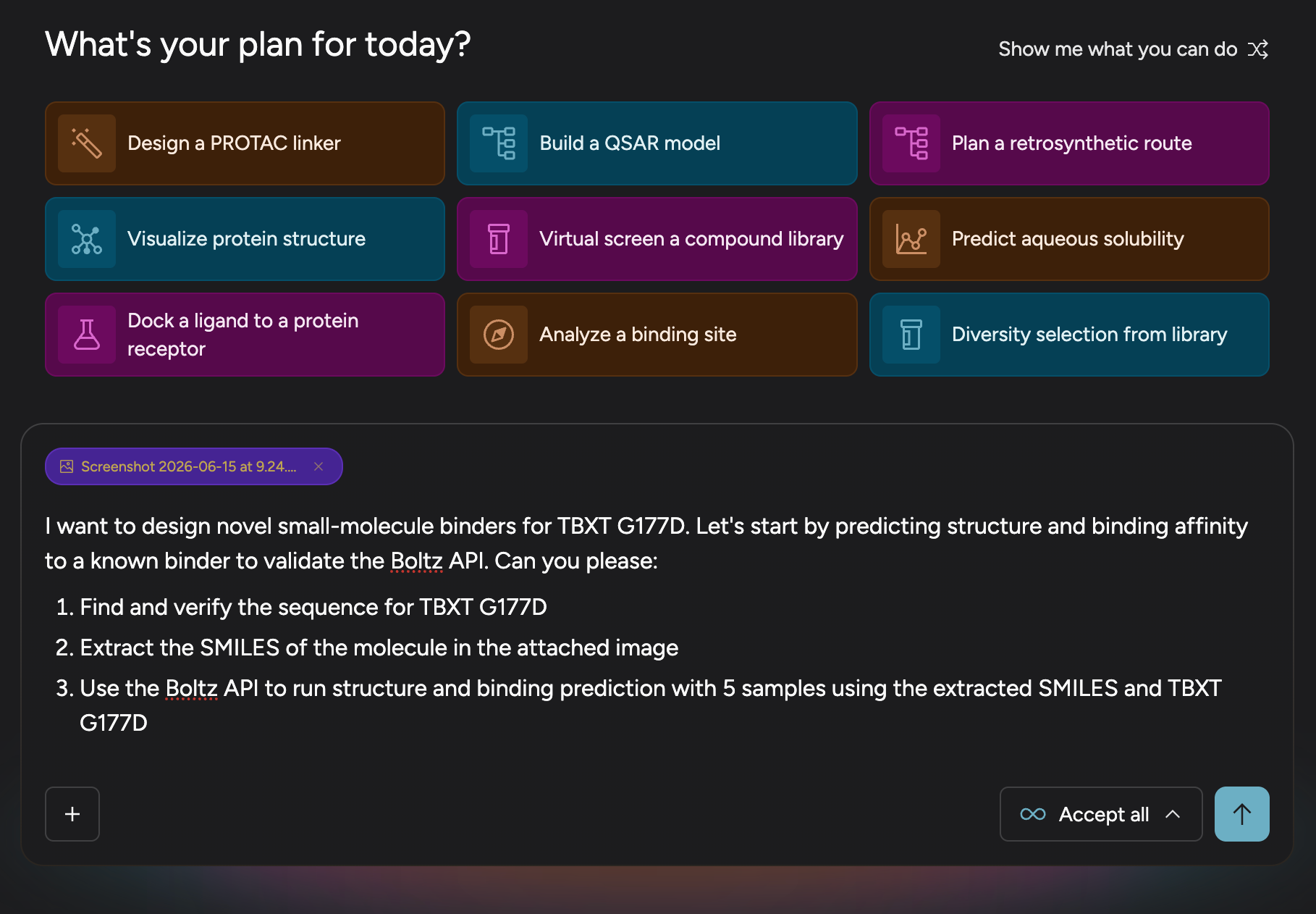
The Boltz API returns a single object with the predicted structure and associated metrics, which Axon automatically parsed. The ligand ipTM scores (interface predicted template modeling, a 0-1 value that indicates the model’s confidence in the accuracy of its predictions) ranged between 0.70-0.85 across 5 predictions, indicating strong consistency from the predictive workflow. However, the model only returned low-to-moderate binding confidence (BC = 0.2), which we can expect from a moderately binding compound.
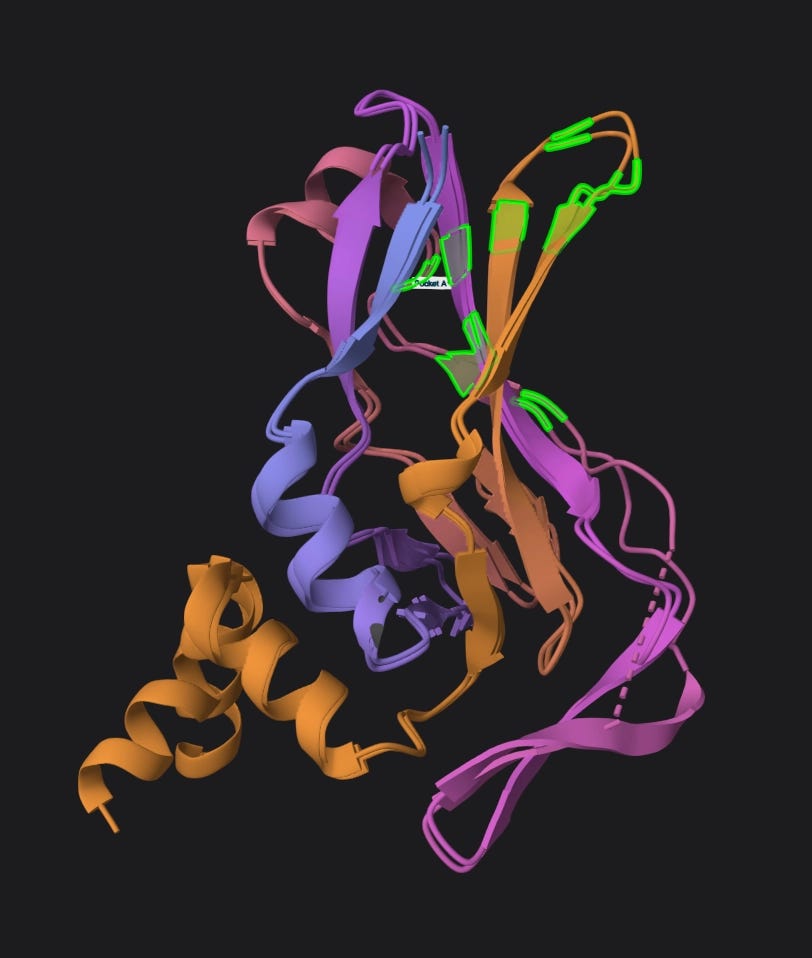
We further asked Axon to compare the Boltz predicted structure to an experimentally crystallized structure of TBXT G177D. While the overall Cα RMSD was decent (2.48 Å), it was actually skewed by deviating conformations of a flexible loop region and the intrinsically disordered C-terminal tail region, while the binding domain (pocket A’) was actually very well predicted (1.42 Å RMSD). This gives us high confidence in the accuracy of the Boltz API in predicting relevant structures that are consequential for ligand design.
Candidate generation at scale with ease
With a protein structure ready to go, launching a large-scale design campaign focused on the same pocket that Compound 10 above targets was similarly easy. Here’s the Axon prompt we used:
This paper cites pocket A as high potential for druggability: https://www.nature.com/articles/s41467-025-56213-1
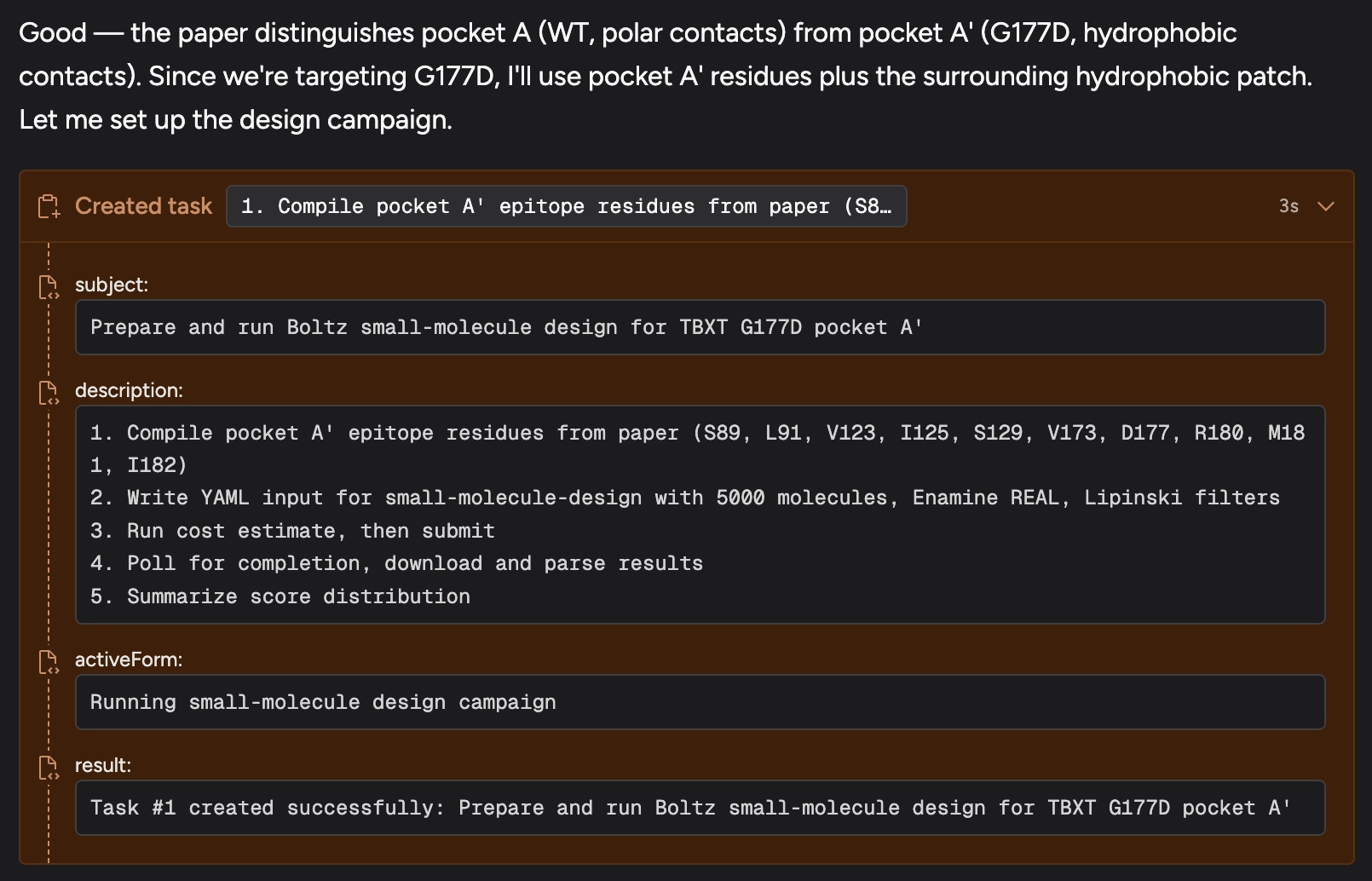
Can you identify the residues associated with pocket A, then run a small molecule design campaign through the Boltz API targeting this pocket? Generate 5000 molecules from Enamine REAL space with Lipinski filters applied. When completed, download and parse the results, and give me a summary of the molecules generated and score distribution.
Notably, I actually made a mistake here: pocket A is associated with wild type TBXT, while the allosteric pocket in the G177D variant is pocket A’ in the experimental reference. Axon figured this out, made a plan, and proceeded with the appropriate design campaign.
Boltz API’s small molecule design workflow took under an hour for 5,000 generated molecules. The API returned a JSON file for each with a number of metrics including binding confidence, optimization score, ipTM score, and several predicted ADME properties. At my request, Axon compiled these results into a CSV file and into the following plots showing significant diversity in predicted properties:
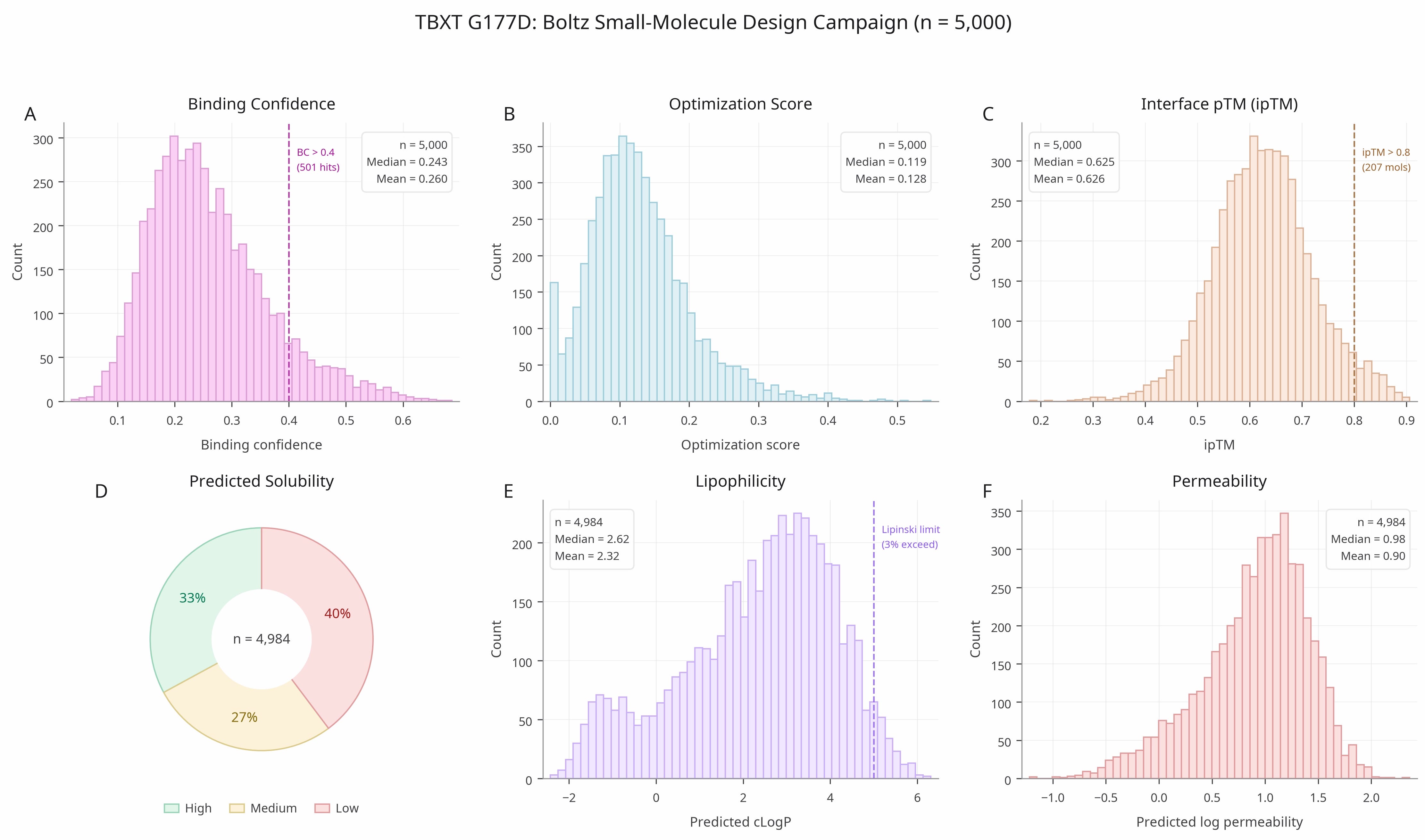
We filtered the design results for desirable drug candidates based on Boltz-predicted properties (BC > 0.4, ipTM > 0.8, medium-to-high solubility, cLogP < 5, log permeability > 0), then computed brief structural analyses with Axon. Interestingly, the 6 molecules that passed filtering (shown below) are all structurally dissimilar from each other and from the experimental Compound 10, with pairwise Tanimoto similarities ranging from 0.059 to 0.216—essentially random. This dissimilarity is expected from a design campaign sampling chemical space broadly rather than analoging off a known hit and indicates that these molecules could represent genuinely novel chemotypes for TBXT G177D.
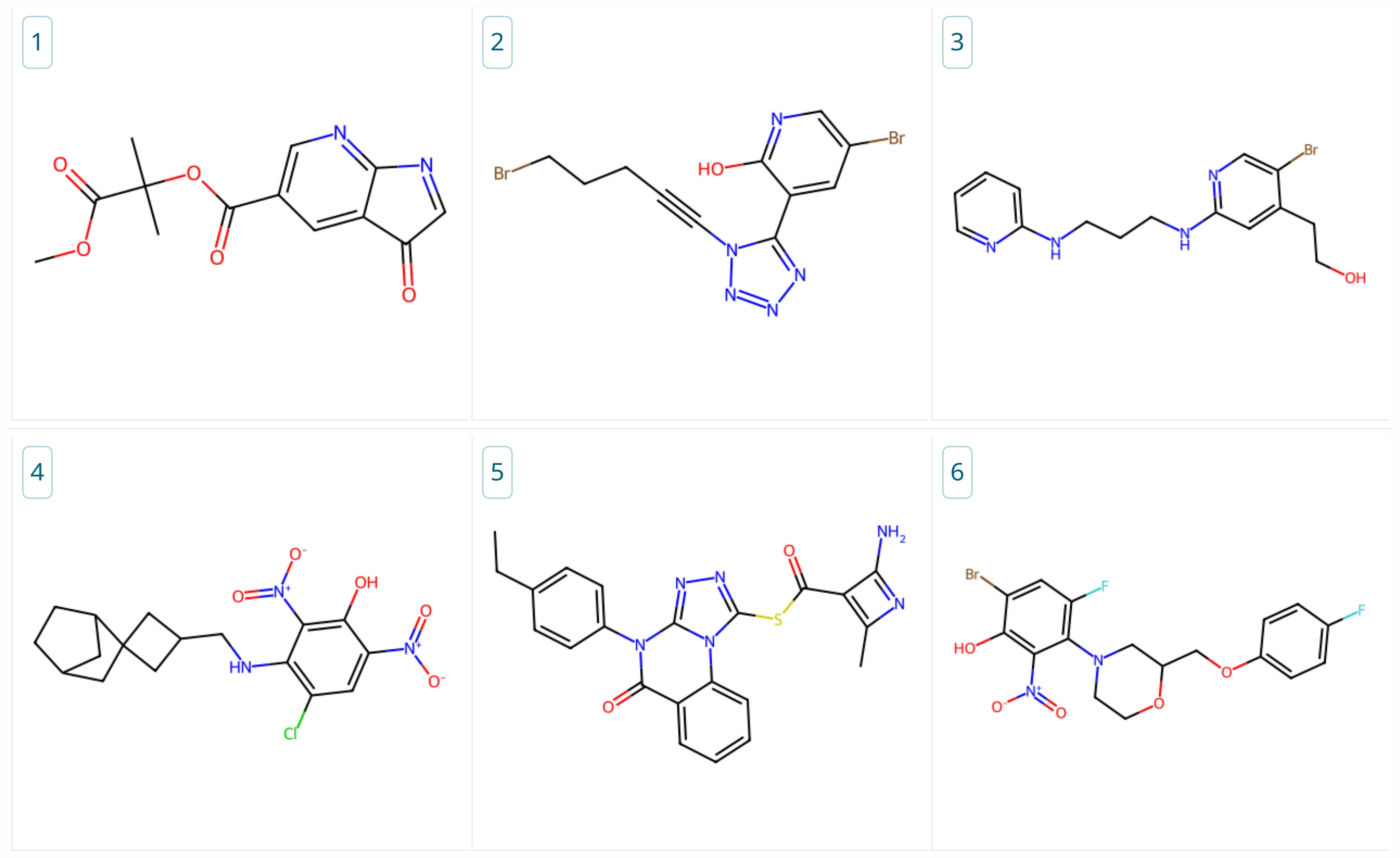
Automated hit identification
Finally, we cued Axon to run interaction analysis with PLIP, which can help elucidate which molecules are the most likely ‘hits’ for further investigation and optimization. Again, a straightforward prompt:
Can you run PLIP analysis of these 6 compounds based on their Boltz predicted bound structures?
Axon chose to generate the TBXT complex structures for each molecule using Boltz API’s “structure and binding” workflow again. The following PLIP analyses revealed something surprising: while interfacial interactions were dominated by hydrophobic contacts for all molecules, consistent with experimental observations of successful binders, pocket A’ engagement was actually quite sparse. Only 3 of the 6 molecules contacted key pocket A’ residues, while the remaining molecules largely interacted with hydrophobic residues just outside the pocket or even further away. A clear standout for targeting pocket A’ emerged: Molecule 6 showed the best pocket engagement with 3 residue contacts, while simultaneously demonstrating the most total interactions with TBXT and an improved binding confidence score (0.420) over Compound 10.
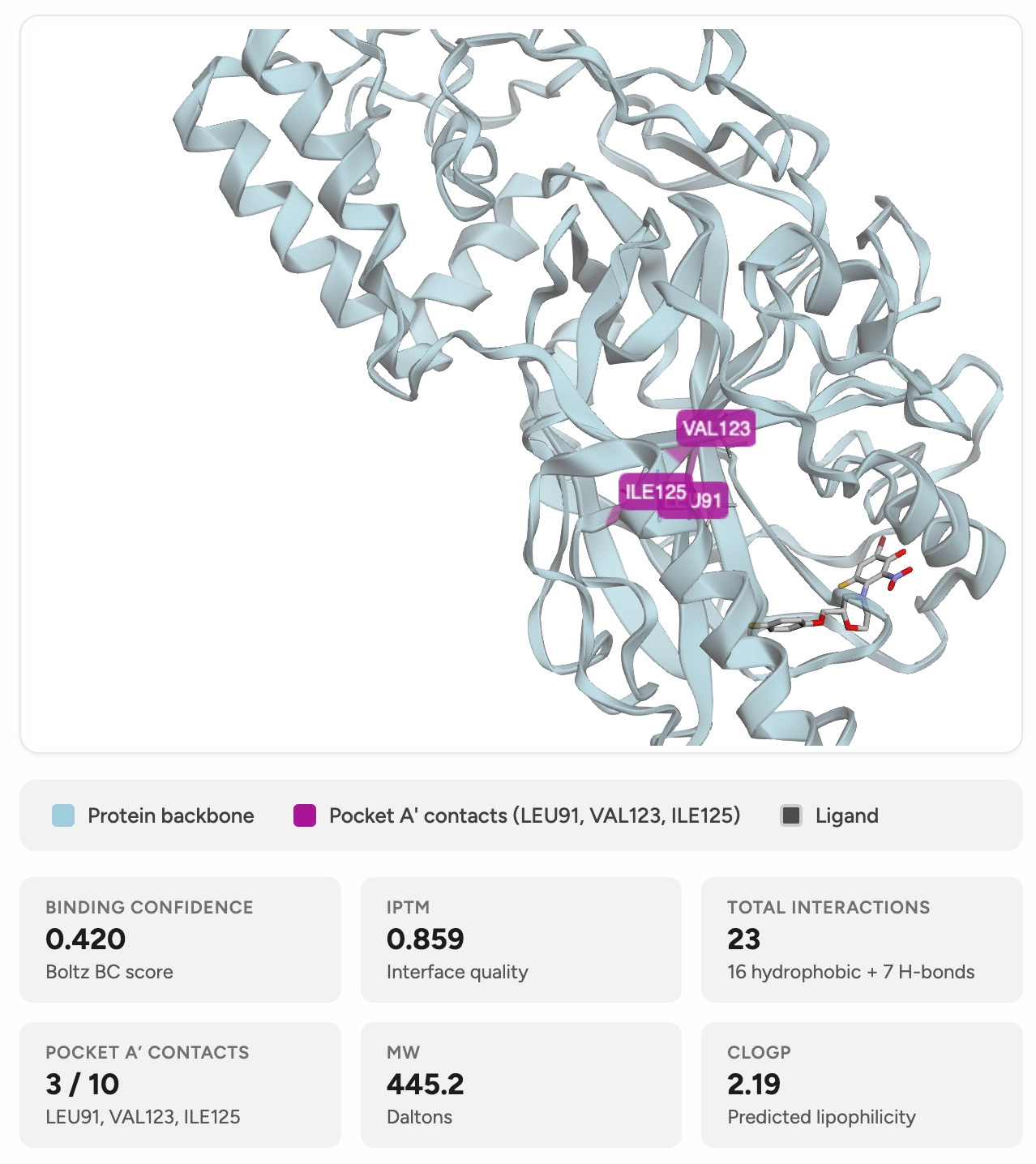
Molecule 6, shown in complex with TBXT above, is a halogenated nitrophenol linked to a fluorophenyl ether through a saturated heterocycle (SMILES O=[N+]([O-])c1c(O)c(Br)cc(F)c1N1CCOC(COc2ccc(F)cc2)C1). Axon flagged that the nitro group is typically disfavored in drug candidates due to its association with mutagenicity, although there are approved drugs with nitro groups so it’s not an automatic disqualifier and would require Ames testing (mutagenicity assay) early on. As with all early hits in drug discovery, binding and ADME properties of Molecule 6 can almost certainly be improved upon with iteration and optimization, but it serves as a novel and promising starting scaffold for pocket A’.
Possibilities are endless
In Boltz’s own experimental validation, they found that their generated molecules demonstrated strong potential as starting points for medicinal chemistry campaigns, but were not finished leads. The same applies here: we found a novel potential binder for pocket A’ in the notoriously difficult TBXT system, but significant optimization and validation is still required to build real confidence in any candidate. In a more realistic drug design campaign, a much broader net should be cast by generating more molecules (Boltz recommends 20k+), performing iterative design, or investigating multiple pockets, before filtering down to a few candidates. Similarly, a lot more exploration and validation should follow: interaction analysis, cross-validation with other programs, dynamics simulations, etc.
All of this—and more—can be done in Axon with the same ease as the demo above. Axon handles complex orchestration and context to remove even the burden of coding for an API and parsing results. With clear conversation, multiple Boltz workflows can be launched in parallel, and results can be automatically processed and used as input for downstream processes through Boltz or other tools available on Axon. This frees scientists to focus on direction and thought work to de-throttle the rate of discovery.
With our new partnership with Boltz, we are taking a clear step towards accelerating every stage of research in pre-clinical drug discovery, and we’re excited to see how it amplifies what is possible for our users. Read more about the Boltz release here, and about Axon capabilities here. Sign up to try Axon today!